Showing posts with label a11. Telephone Etiquette. Show all posts

Wednesday, May 21, 2008

Community Involvement


As your rank and status improves within your company, you may be asked to volunteer your expertise and energy as a member of the board of directors of a charity and/or a community organization.
This request is a feather in your cap. Your company thinks highly enough of you to ask you to represent it in the larger community. It can also evolve into a situation fraught with pitfalls. It may be that your boss has friends or important business associates who are involved with the organization you are to join. In any case, you may be sure that the impression you make will be conveyed back to the executives of your company.
In other words, volunteer work can be an important career opportunity. Don’t blow it.
The rules of etiquette are extremely important in these situations. Remember that you will be dealing with people who may be quite different from your work colleagues. Some of your new acquaintances may be artists or scholars. Some may be wealthy dilettantes who dabble in organizations that foster artistic or charitable causes. They may include political figures or persons who represent the segment of the community that the charity supports.
Here are some basic guidelines:
  • Petty personality conflicts or political cliques within the board may distract members from the work at hand. Do everything you can within reason to make it clear that you will not take sides.
  • Be cordial but somewhat reserved in your relations with the other board members, at least until you get a good handle on how the relationships work. When in doubt, more formal is better than less formal.
  • As with company meetings, arrive on time and don’t dash back to your office before the meeting is over.
  • Do your homework so that the meeting will not be delayed while you are being brought up to speed.
  • Offer to help the head of the organization with contacts or access to special information.
  • Notice when something is amiss—such as inadequate computer support—and seek to correct it.
  • Always thank the volunteers who work in that organization, including the people who organize the benefits.
  • Remember promises made at board meetings and take on specific responsibilities by keeping good notes and following up with action.
  • Be a cheerleader back at your home organization. Speak proudly about the work your charity is doing. Nobody expects you to be a half-hearted volunteer.
  • Always buy at least two tickets to your charity’s benefits; buy more if you can afford them. Top executives of corporations are expected to buy a table as a corporate donation.
When you are on the job, you are on display. Familiarity can’t be allowed to breed carelessness; in fact, the necessity of spending a great deal of time with your coworkers demands even more attention to the details of courtesy and kind behavior.

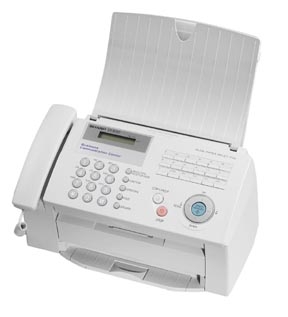
The Fax Rules


Rule 1. Don’t tie up the fax machine. The transmission should be expected, important, and specifically addressed.
Rule 2. Start off with a cover sheet saying whom it’s from, the number of pages (the cover sheet is included in page count), and whom it goes to.

Answering Machine Etiquette


Before recording your voice on your machine:
  • Write out your specific words and make several practice tries.
  • Smile when you speak so that you sound enthusiastic and approachable.
  • Forget about sound effects or other gimmicks; cute is unprofessional.
  • Briefer is better: “This is Marjorie Matthews speaking. At the sound of the tone please leave your name, telephone number, and the best time to reach you. I’ll return your call as soon as possible.”
When you get someone else’s machine:
  • Be sure to leave a message even if you get a wrong number. Saying that you dialed incorrectly will allay security concerns.
  • Give your full name.
  • Say why you are calling.
  • Mention the best time for you to be reached.
  • Leave your complete telephone number, pausing between the area code and local number.

Voice-Mail Etiquette


Leaving voice mail is another business fact of life that is here to stay. It’s a very good and useful tool for conveying information within your company. However, clients or others calling in from outside are apt to find it annoying. And, depending on the message, it can be almost as bad as dealing with a real and really disagreeable person.
The message on this medium should give the caller some choices—leave a message, call another extension, or switch to the receptionist. However, few things are more annoying than messages with too many, mostly irrelevant options.
The message you leave should embody the journalist’s five Ws—who, what, when, where, and why: “This is Mary Mitchell on Thursday, June 1. I’ll be traveling all day today and will not be able to return calls until after 7 P.M., Philadelphia time. Please leave your name, telephone number, and a brief message.” When you are the caller, be brief and to the point. For example, “This is Mary Mitchell, calling on Thursday, June 1, about the training seminar. I’m calling to confirm that 12 people are registered from your company.”

Tuesday, May 6, 2008

Cell Phones and Beepers Etiquette


Cell phones have been compared to pacifiers for adults. They make people think they are connected to a vital source of informational nourishment. It seems to me that the most insecure and/or boastful people are the ones who are most loud and ostentatious about using their cell phones.
Nevertheless, ownership of a cell phone does not include a license to be rude. Do not whip out your cell phone in a restaurant, at a party, on the train, or in any situation in which the call inflicts your half of the conversation on those around you. If you are going into a business meeting and are not expecting a genuinely urgent call, turn off the cell phone. The same goes for the theater, a museum, and other places where the ringing of a phone would be unwelcome. Some restaurants now require patrons to leave their cell phones with the maĆ®tre d’ and will inform you if you get a call. The same principle applies to beepers. Be prepared to be out of touch in certain situations or get a beeper that can be switched to vibrate when necessary.

How to Close a Call?


People remember the way telephone conversations end. At the end of your call, thank the person for the call and do your best to try to end on a positive note. Never conclude by just saying, “See ya,” “Bye-bye,” or “Later.” Say goodbye and let the other person hang up before replacing the receiver. If you have a chatty caller who is droning on too long, say something like “I’ll have to hang up now. My 2:00 appointment is here,” or “Much as I’d like to chat, I’m on a deadline at the moment. Is there anything else I can help you with?” After the call, do your homework. Everybody appreciates a follow-up and followthrough. Keep any agreements you make. If you have promised to provide information or data, get that material to the other person promptly.

Friday, May 2, 2008

How to Place a Call?


Place your own calls whenever possible. If the person you are calling has to wait for you to come on the line, she is apt to think you consider your time more important than hers. This perception could cause the conversation to begin with a standoffish atmosphere.
Let people know right away who’s calling. Every business telephone call should begin with the caller introducing him- or herself, identifying the company, and saying who the call is intended for. This information enhances your chances of being put through promptly to the person you are trying to reach, and you will sound confident and in control.
Try to call when you know it’s convenient for the other person. If you call a business just before closing time, you will be rushed and given half-hearted attention at best. If you get another call while on the telephone, remember that the first caller has priority.
Tell the second caller you will get back to him or her and resume your first conversation. Trivial or long-winded calls are annoying intrusions in a busy workday. Make sure you have a good reason to make a call, and deal with your business in a prompt, organized way. Another consideration is that such calls convey the impression that your job is of so little importance that you have time to make chatty, unnecessary calls. If your call somehow gets disconnected in the middle of a conversation, you should call back immediately—whatever the circumstances.

How to Correctly Answer Telephone?


Answer the telephone no later than the second ring if you can. Identify yourself with both your name and company or department.
  • “Hello” is better than “Hi.”
  • Say, “May I tell her who’s calling?” not “Who’s calling?”
It is up to you to determine how your telephone will be answered, not only by you but also by members of your staff. You have to let them know what you expect. You can try calling your own office to spot check.
Also, don’t let a phone call preempt an in-person visit. For example, if it’s 2:00 P.M., the person with the 2:00 P.M. appointment has priority over the person you are speaking with on the telephone.

Saturday, April 26, 2008

Telephone Etiquette


Everybody knows how to use the telephone, but very few people know how to use it to their best advantage.
When you speak to someone on the telephone, vocal quality counts for 70 percent of the initial impression you make, and the words spoken count for 30 percent. Listeners base their opinions of you not only on what you say but also how you say it and the tone of your voice.
Speak unto others as you would have them speak unto you. It’s up to you, the speaker, to make sure that the listener gets the message loud (but not too loud) and clear. The person on the other end shouldn’t have to work hard to hear you and understand what you are saying.
When using the telephone, use your mouth for speaking only. Eschew chewing, eating, or drinking.