Showing posts with label a29. Dealing With Criticism. Show all posts

Monday, January 31, 2011

Embarrassing Situations


Your colleague’s fly is open, your friend has a giant run in her stocking, your lunch mate has spinach stuck between his front teeth, or someone has feloniously bad breath. What do you do?
First of all, you have to be direct but discreet. Get the person out of earshot of other people and say, “Your fly is open,” in the same tone of voice you would use to say, “It’s raining outside.” If you don’t know the person, find somebody in the group who does to give the message.
You are in a more serious situation if you have a friend who has a particular and persistent bad habit or something like chronic bad breath. If he’s a real friend, you have to tell him about it even if you know he won’t like it. Use the “critical I” if you can. “I’ve been told that I’ve had bad breath from time to time, but it seems to be a chronic problem with you. Maybe you have a dental problem you don’t know about, or it might be just a matter of using mouthwash more often. That’s what worked for me.” The story or analogy you convey doesn’t necessarily have to be about the exact problem that your friend has. If you haven’t had that exact problem before, choose a story that shows parallels to the other person’s situation.

Sexual Harassment


What to do? Go right to the senior officer in your company or department, report it, and demand justice? Consult a lawyer? Put up with it until it becomes blatant? Cry? Hit somebody?
One way you could react is by giving a response that attacks the ego of the offender:
“I hope you don’t think that was sexually attractive. In fact, it was comical. You’re making a fool of yourself.”
Or for something a bit stronger: “I didn’t realize how pathetic you were. You’re really a silly little man.”
Or begin with a warning: “I’m going to forget this
happened. But if anything like this ever happens
again, everybody here is going to know about it, and you’re going to be in more trouble than you can imagine.”
Be prepared to follow through on your warning if necessary.

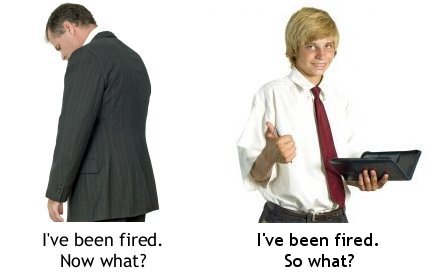
Firings, Layoffs, and Demotions


The work arena is fraught with difficult and disappointing situations. People get fired, laid off, passed over for promotion, transferred against their will, and chewed out unjustly by the boss. In these situations nothing you can say will fix the problem, so it is important to mirror the person’s distress. Let him know that he isn’t alone, that he is, in fact, in good company. Reinforce the person’s good qualities. Don’t say, “Things will work out for the best,” or even worse, “I told you something like this would happen.” Don’t say that what happened to somebody else is even worse than what happened to him.
Instead, try one of these phrases:
“I’m so sorry you must go through this.”
“Is there anything I can do to help?”
“This must be very, very tough for you.”
Do not indicate in any way that the unfortunate turn of events was predictable or even partially the fault of the injured party. If a colleague was denied promotion for what you believe to be very good cause, don’t launch into a lecture about the skills she needs to acquire or improve upon or tell her that somebody else was more qualified for the position. If the injured party says, “Don’t you think that this was rotten luck?” and you know luck had nothing to do with it, just say, “You must be really disappointed,” or some other phrase that lets her know you identify with her emotional state.

Friday, December 31, 2010

Dealing with Bad News


More often than we’d like to think, and often when we least expect it, people we know end up getting fired, going into bankruptcy, having accidents, getting indicted, and experiencing the death of a loved one. If it happens to someone you know well, you need to recognize the difficulty and offer your sympathy and—if appropriate—your help. It is less than useless to act as if nothing has happened. Don’t wait for the other person to find an appropriate time to tell you about the misfortune and don’t let the subject become the proverbial elephant in the living room that you both try to ignore.
Instead, be direct. For instance, you might say, “I heard about the fire at your house last week. I’m so glad that you’re all right,” or say, “I was so sorry to hear about Jim’s sentencing hearing. It must be difficult for you.”
If you attend a funeral, express your condolences as directly and simply as possible. You could say, “I’m very sorry about your loss,” or simply say, “I’m so sorry.” On the other hand, you may want to remind the bereaved of some characteristic of the deceased by saying something like “Our office won’t seem the same without Bridget’s daily baseball team updates” or “I’ll miss seeing all her crazy T-shirts.” When someone begins to tell you bad news, be quiet and listen. Your concern will be mirrored in your attentiveness. You can nod and say, “Uh, huh,” until you feel it’s appropriate to add something like “This must be draining for you. I’m so sorry.” Don’t think for a moment that it is helpful or encouraging to compare what your friend is suffering to another situation you’ve heard about or experienced—or to recount an even worse challenge or injury as a way to tell your friend that “it could be worse.” That kind of one-upmanship only makes people feel even more upset. And you can see why. Just imagine that you’re complaining to someone about your severe headache and, instead of sympathizing, she replies, “You haven’t had a headache until you’ve had one of my migraines.”
Nor should you choose this time to express opinions about proper behavior or judgments about people’s character (for example, “Well, if your husband hadn’t cheated on his taxes, he wouldn’t be facing prison, would he?”). And don’t offer unsolicited advice.
Above all, don’t use the opportunity to pry into the other person’s life. At a time like this, you two may reach a level of intimacy unprecedented in your relationship. A casual acquaintance might for a few minutes become uncharacteristically open and candid with you—and might regret it later on. Try to stay within the boundaries that previously characterized your relationship while remaining sympathetic and attentive.

Facing Cosmetic Surgery


Thousands of people will undergo cosmetic surgery this year. Their reactions will fall somewhere between silent confusion and a straightforward willingness to discuss their decision to change their appearance.
More people than ever are electing cosmetic surgery, but today’s motivations often are far different from the erstwhile stereotype of the suburban matron with too much time and money on her hands.
In today’s downsized, competitive job market, many people elect cosmetic surgery for reasons other than vanity. They do it because they are convinced it will further their career.
And with more and more people appearing publicly in various stages of presurgical and postsurgical conditions, the problem of what to say and what not to say arises for both the patient and the friends and acquaintances of the patient. Although most people today are open about having cosmetic surgery, it can still be a touchy topic for conversation. To avoid hurt feelings, follow these suggestions:
  • Never tell a person that he or she is crazy to have cosmetic surgery.
  • Wait until the person opens the subject before you ask whether someone had cosmetic surgery.
  • If you are curious, try saying, “You look wonderful today.” If the reply is that the person had surgery, ask only: “Are you pleased with the results?”
  • Even if pressed, never criticize the results. If you must, you can say: “I see what you mean but only when you point it out.”
  • Never volunteer the names of others who have had cosmetic surgery.
  • Never gossip about the subject.
  • Cosmetic or not, it’s still surgery. Be solicitous about the person’s health and well-being.
  • If you have had cosmetic surgery and look markedly different, make it easier for those around you by opening the door for comments.

The Fine Art of the Compliment


A compliment is a two-way gift. It benefits both the giver and the receiver. Too often, people deprive themselves of the pleasure of giving a compliment when they hesitate and let the moment slip by. Or perhaps the other person is so consistently wellgroomed that we don’t bother to say, “You look great today.” Or someone is so consistently efficient that we fail to say, “Good job.”
When giving a compliment, remember these points:
  • Be sincere. Complimenting someone just because you think it’s a good idea is a bad idea. A phony compliment is easy to spot and instantly destroys the credibility of the speaker. If the luncheon speaker was a total flop, don’t compliment the speech. Talk about the effort the speaker made to attend the function and the person’s past achievements, if any.
  • Be specific. “That was a marvelous casserole” is better than “You’re a terrific cook.”
  • Be unqualified. Don’t make the mistake of damning with faint praise: “That was a good report, considering …” or “This casserole is okay.”
Don’t compare. You can diminish the compliment by comparing the accomplishment to some other achievement—unless you are comparing it to something heroic, and then the compliment sounds insincere.
When receiving a compliment, just smile and say thank you. Never try to shrug off a compliment or disagree with the person who is trying to compliment you. If someone compliments you on your dress and you say, “Oh, this old thing?” you’re actually saying that the other person’s judgment is poor or that she doesn’t know what’s fashionable. If someone compliments you on doing a good job at the office, don’t say, “It was nothing,” or “It should have been more complete (or finished earlier).”
This response is insulting to the other person, implying that his standards are not very high.
“Thanks, I worked really hard on it” is much better.
Here’s another important tip: Never unilaterally upscale a compliment by infusing it with even more praise and enthusiasm than the giver meant to give. For

Tuesday, November 30, 2010

Becoming The Receiving End

Whether you deserve it or not, you will be the subject of criticism at one point or another in your life. Be ready. If the criticism is justified, accept it and treat it as a problem that needs to be resolved. Acknowledge that you have a challenge ahead of you and make it clear to the person who pointed out the shortcoming that you intend to address it.
If you believe that the criticism is unjustified or delivered harshly or publicly, you have every right to react in a different way. However, if you get angry and start shooting back, you will end up saying things you will regret and so will the person who offered the criticism in the first place. In this situation it is usually best to put off discussing the matter: “Let’s talk about this when we’re both a little calmer” or “We ought to get together and work this out. What’s a good time for you?” If someone says something critical about you in the presence of others, you can try “freezing” your critic by stopping whatever you are doing or saying and looking the person dead in the eye for a moment. Or you can say something like “Very little good comes of criticizing others in public. Please tell me your objections (or problems) in private.”
If you’re not sure that the criticism is justified or if you need time to think it over, you can say, “I’m glad you’re letting me know what’s on your mind. I’d like to think about it and get back to you.”
If you know you’ve goofed, it’s sometimes best to just say, “I apologize,” and that’s all. Depending on the situation, something more may be required: “I never intended to (embarrass, upset, offend) you, but I can see that I did, and I’m sorry.” But don’t whine, don’t grovel, and don’t make excuses or try to shift the blame.

Softening the Blow

When delivering criticism, keep these points in mind:
➤ Avoid the “but” bomb. “I thought the points you made in your report were excellent, but ….” The but bomb immediately sends up a flare and triggers a defensive reaction. The person hears but and begins constructing a reply instead of listening closely to your further comments. Try: “I thought your report was outstanding, and next time I suggest you include ….” Next time does not invalidate the first part of the sentence as but does.

➤ Keep it impersonal. Never say that some act or person was dumb or wrong. Talk about behavior, not personality.
➤ Keep it private. If you criticize someone in the presence of others, the person is not thinking about your message, but about being humiliated.
➤ Be specific. Don’t criticize in generalizations. Mention specific incidents or behaviors.
➤ Soften the impact. Try beginning with a compliment: “You are usually a very considerate person. That’s why I was so surprised at your behavior at lunch today.”
➤ Try advice. You can also deliver criticism in the form of advice. Instead of saying, “You’ll never even reach the basket if you shoot the ball like that,” say, “I’ve found that keeping my elbows in close gives the shot more power.”