
Encourage your guests to have dessert when the server returns to the table from clearing the entrees. If they do, you do. If they don’t, you don’t—no matter how much you have been looking forward to that chocolate torte. Ask your guests if they would like coffee or tea. When it is served, ask for the check. Use this time to review your mealtime discussion: Make sure you understand whatever agreements have been reached and the follow-up steps you’ve decided upon.

The host’s responsibility is to pay attention to the quality of the service and the food. Make sure your guests are served properly and have whatever condiments they might need.
If it looks like something is wrong, ask your guest. If it is, call the maître d’ and have the item replaced. If things are going badly, keep your cool. Do not engage in a confrontation with the server or the maître d’. Tell your guest: “I’m so sorry. The restaurant seems to be having a bad day.” Then deal with the manager later.

If you don’t have drinks, spend 5 or 10 minutes talking before asking for menus. If you have drinks, offer your guest a refill. If the answer is no, ask for menus. If the answer is yes, ask for menus when the second round of drinks arrives. Now it’s time to order. Your dress-rehearsal exploration of the menu pays off now. Give your guests clues about your intentions by mentioning specialties and encouraging them to order appetizers. Have the server take the guests’ orders first and be sure to keep pace with your guests by ordering the same number of courses, whether you want them or not.
As a guest, you should feel free to ask, “What do you recommend here?” if the host has not given clues.
Be decisive! Neither the host nor guest should spend a long time poring over the menu. Steer clear of user-unfriendly items such as spaghetti, salads, large sandwiches, or anything that will be messy or difficult to eat.

The server will now ask if you want anything from the bar. Decline if your guest does. Order a drink if your guest does. It doesn’t have to be an alcoholic drink, and no explanations are necessary. You can remove any tinge of judgment about alcohol by using the convenient “today” tactic: “I’m not having wine today, but please do have some if you like.”
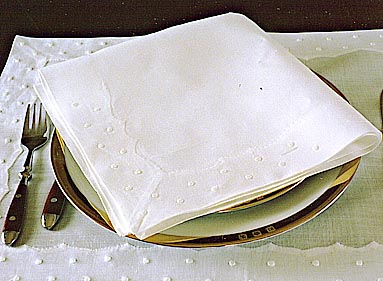
Your napkin will be on your plate or to the left of it. As soon as you are seated, place your napkin on your lap unfolded, or half open if it’s a large dinner napkin. Don’t tuck the napkin into your shirt or belt. It’s okay to bring the napkin up to your chest with sips of soup or sauce. If you leave the table for any reason, place the napkin on your chair and push the chair under the table. Watch the upholstery. You don’t want your gravy-stained napkin to soil the upholstered seat of a chair.

Give the preferred seat to your guest. Usually that’s the one first pulled out by the maître d’, but if a chair isn’t pulled out, quickly decide which is the best seat (best view, most comfortable, and so on) and gesture to your guest to occupy it. Sit at right angles to your guest if possible. If you have two guests, try to avoid sitting between them, or you will feel as if you’re watching a tennis match, looking from one to the other in the course of conversation.
The host always stands when someone new joins the table and remains standing until the other person or persons is seated. If someone leaves the table, the host does not need to stand.

Get to the restaurant about 15 minutes early and check your coat. If you did not tip the maître d’ at the dress rehearsal, do so now. Wait for your guest near the door. If you must take your seat because there is no place to wait, leave your napkin on the table and don’t eat or drink anything until your guest arrives. In other words, the table should remain pristine. Stand up when your guest arrives and remain standing until he or she is seated.
If you are waiting for more than one guest, wait near the door, if possible, for 5 or 10 minutes; then tell the maître d’ you are expecting someone and ask to be seated. The ideal situation is for all of the guests to go to the table together, although this may not always be possible.


